


Fused Silica Quartz Beakers for High-Purity Chemical Digestion & Heating Tests-Amy
Издание: October 22, 2026
Lianyungang Shengfan Quartz shares an application case of fused silica quartz beakers for laboratory high-temperature digestion, acid treatment and trace element analysis.
An environmental testing lab originally used ordinary glass beakers for sample digestion with concentrated acid and heating. During repeated heating processes, borosilicate glass released sodium, potassium and other metal impurities into the solution. These impurities interfered with trace heavy metal test results, leading to unstable and inaccurate detection data. Besides, glass beakers were prone to cracking when heated rapidly or exposed to hot concentrated acid, causing sample loss and safety risks.
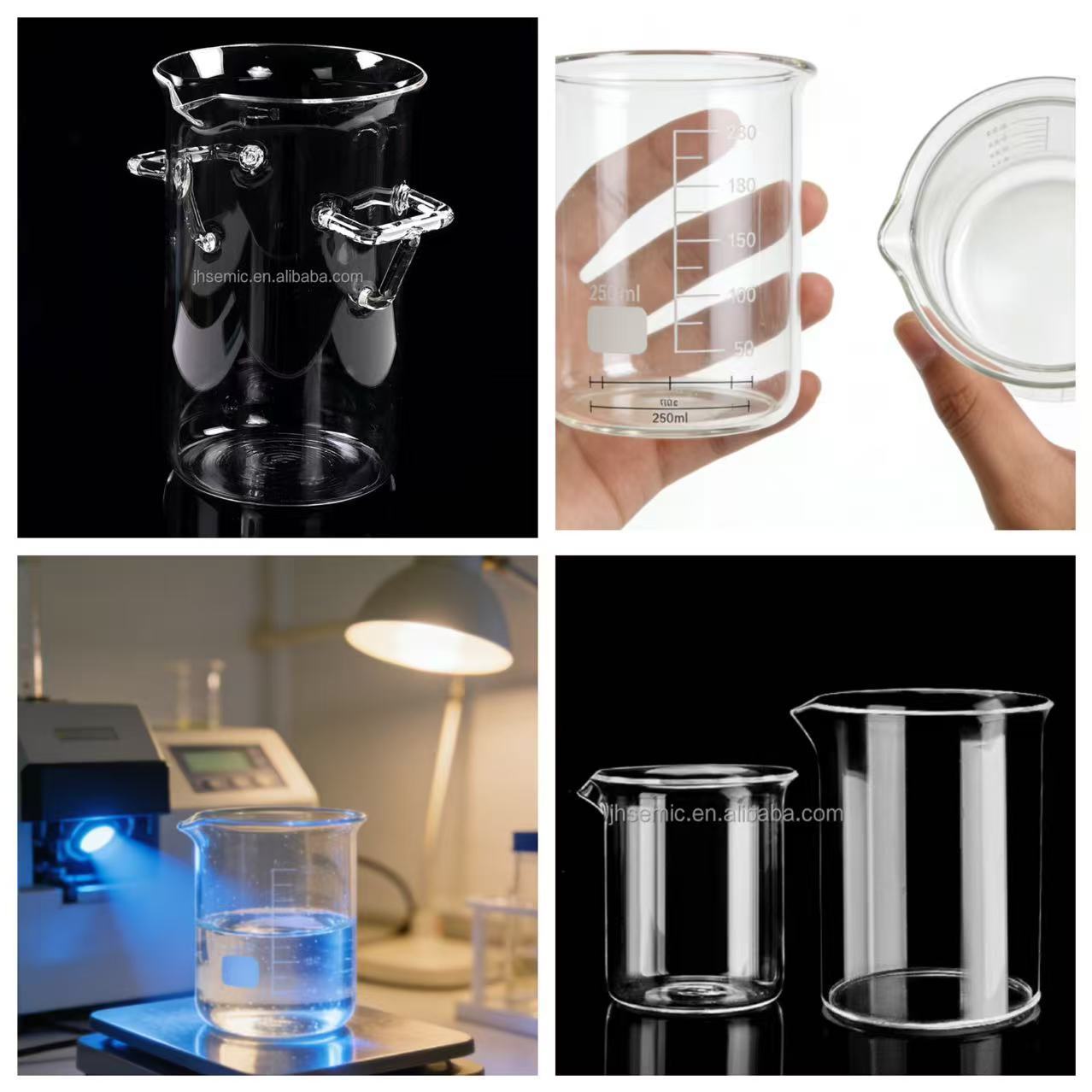
The laboratory later replaced them with custom JGS2 fused silica quartz beakers supplied by Shengfan Quartz. Made of high-purity silica material, quartz beakers feature outstanding chemical inertness and strong resistance to most concentrated acids. They hardly leach metal ions, which is critical for trace analysis. With ultra-low thermal expansion, they withstand direct heating and rapid temperature changes without easy cracking. They can be used continuously at high temperature and maintain stable performance for long-term repeated experiments.
Compared with glass beakers, quartz beakers cost more at first purchase. However, they effectively eliminate impurity interference, improve test accuracy, reduce sample rework and lower the frequency of replacement. The overall comprehensive cost is more competitive for high-precision analytical scenarios.
Shengfan Quartz produces quartz beakers in different capacities, with options for spout, thickened wall and fire-polished surface. Strict quality inspection is carried out to check bubbles, scratches and dimensional specifications. Sample testing and bulk export orders are available for environmental laboratories, chemical analysis, pharmaceutical research and metallurgy testing. Our technical team can recommend suitable specifications according to heating method, reagent and detection requirements.

