


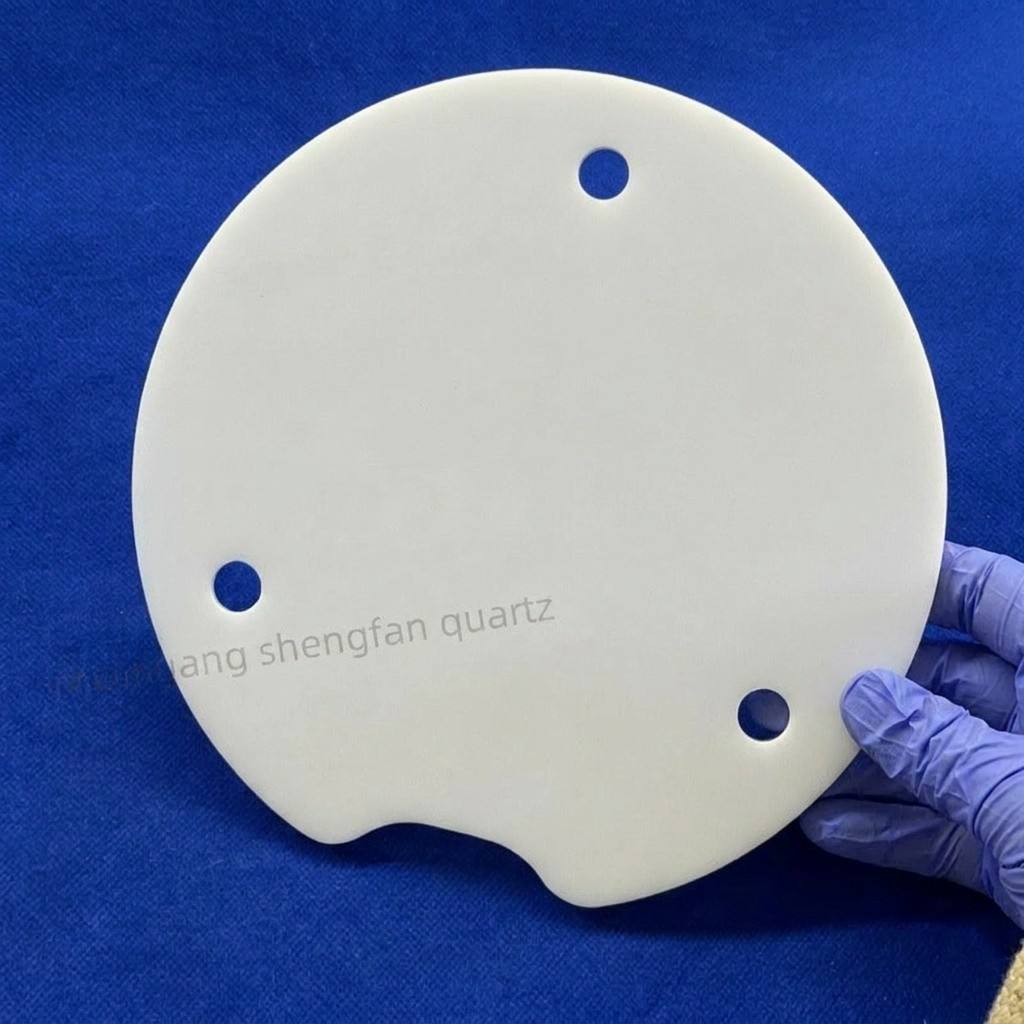
Непрозрачные перфорированные кварцевые листы: высокоотражающие материалы для тепловой защиты от излучения для полупроводниковой промышленности
Издание: July 21, 2026
Обзор проекта
-
Клиент: Корейский производитель компонентов фотоэлектрического оборудования
-
Продукт: непрозрачные кварцевые перфорированные листы (для защиты от теплового излучения в печах PECVD)
-
Поставщик: Lianyungang Shengfan Quartz Products Co., Ltd.
-
Материал: высокочистый непрозрачный (молочный/опалесентный) кварц
-
Ключевые свойства: инфракрасное отражение ≥ 85%, теплопроводность ≤ 1,4 W/m·°C
-
Применение: теплоизоляционные облицовки для графитовых восприимчивых элементов в фотоэлектрических трубных печах PECVD, теплоизоляционные защитные слои для диффузионных печей,защитные покрытия для высокотемпературных камер тепловой обработки
-
Основные процессы: резка диамантной проволоки, прецизионная резьба с помощью ЧПУ, двустороннее лапирование, безотводная отделка краев, прецизионная перфорация
Первоначальные болевые точки клиента
1Недостаточная теплозащита с прозрачным кварцем
Клиент ранее использовал прозрачные кварцевые пластины в качестве радиационных щитов в своих трубных печах PECVD.в результате чего чрезмерное тепло достигает внешних стен печиЭто привело к ускоренному старению периферийных О-колечек, датчиков и линий водоохлаждения, что потребовало отключения технического обслуживания каждые 4-6 недель, что значительно увеличило затраты на простои.
2Сцепленная конструкция, приводящая к утечке тепла и механическим неисправностям.
Предыдущий поставщик мог производить только небольшие непрозрачные кварцевые плиты (максимум 300×200 мм), требующие скрещивания нескольких частей для больших площадей ограждения печи.При рабочей температуре около 400°CКроме того, несовместимое тепловое расширение между скрещенными секциями привело к ослаблению светильников и смещению пластины.ухудшает эффективность защиты и иногда приводит к перелому пластины.
3Недостаточная точность перфорации вызывает трудности с установкой
Каждая защитная плита требовала нескольких отверстий для позиционирования и каналов воздушного потока.с грубыми отверстиями, склонными к трещинамЭто вынуждало заказчика вручную перерабатывать каждую поставку, что занимало около 30 минут на плитку, что значительно задерживало графики сборки печи.
Наши целевые решения и преимущества
1Высококачественный непрозрачный кварцевый материал с превосходным тепловым отражением
Мы выбрали высокочистые непрозрачные кварцевые полоски с однородно распределенными микропузырями (диаметр 10 ‰ 100 мкм, содержание ≥ 20%), достигнув инфракрасного отражения ≥ 85% по всей 2.Диапазон длины волны 516 мкмТеплопроводность всего 1,4 Вт/м·С существенно превосходит прозрачный кварц (1,6·1,8 Вт/м·С), эффективно блокируя передачу радиационного тепла на внешнюю стенку печи.Коэффициент теплового расширения материала по своей сути низкий (5.4×10⁻⁷/°C) обеспечивает превосходную термоупорность, предотвращая перелом или деламинацию при повторном тепловом цикле.
2. Большой формат одночасовой формования устранения пробелов сцепления
Используя наши крупноформатные центры обработки с помощью ЧПУ, мы можем производить непрозрачные кварцевые пластины размером до 800 × 600 мм, полностью устраняя пробелы в сцеплении и связанные с ними проблемы с тепловой утечкой.Для различных моделей печей заказчика, мы предлагаем полную серию одночленных решений в диапазоне от 200×200 мм до 650×450 мм, обеспечивая бесшовную интеграцию с существующими конструкциями оборудования.
3. Точное перфорация обеспечивает точную установку
Используя центры сверления с ЧПУ, оборудованные бриллиантовыми сверляльными блоками, мы постоянно достигаем:
-
Допустимость диаметра отверстия: ±0,02 мм
-
Точность расположения отверстия: ±0,03 мм
-
Грубость стенки отверстия после полировки: Ra ≤ 0,4 мкм
-
Окраины отверстий, свободные от откосов и щелей
Такая точность исключает необходимость в ручной переработке, что позволяет немедленно установить при получении.
Результаты сотрудничества и отзывы клиентов
1Значительное улучшение тепловой защиты
После трех месяцев непрерывной работы в трубных печах PECVDНепрозрачные кварцевые перфорированные листы достигли снижения температуры примерно на 45 °C на поверхности наружной стены печи по сравнению с предыдущим прозрачным кварцевым раствором.Продолжительность службы периферийных компонентов (O-кольца, датчики, охлаждающие линии) увеличилась с 4−6 недель до более чем 6 месяцев, сократив частоту технического обслуживания на 75%.
2Эффективность сборки значительно улучшилась
Одночастичная конструкция исключила процедуры скрещивания, в то время как высокоточное расположение отверстий позволило устанавливать вставку.Время сборки печи на единицу было сокращено с примерно 2 часов до 45 минут, что позволило клиенту ускорить график наращивания производства..
3Продолжительность жизни продукта превысила ожидания
В условиях непрерывной работы при температуре 400°С первая партия из 800 штук прослужила более 12 месяцев без переломов, деформаций,или поверхностного деламинирования, достигая в четыре раза большего срока службы, чем продукция предыдущего поставщика..

